
The Actor's Score
Fleshing out one of the most common assignments in actor training

* Voiceover by 11 Labs, Charlie.
I’ve found that, like many, my actor’s book takes on different roles at different stages of life. In early training, I used to feel like my notes needed to have omniscient detail—I had to memorize and deliver with perfection. What I didn’t realize was that what I really needed was a way to hold the role and to make sense of it, piece by piece, without getting overwhelmed. Over time, I also began to understand that different kinds of projects demanded different ways of guiding my attention: comedy needed rhythm and timing cues, drama required emotional pacing, absurdity asked for tonal restraint with conceptual clarity, and farce thrived on physical patterns and technical precision. Each form invited a distinct way of structuring my score to meet the unique logic of its world.
This flexibility contrasts with the more standardized way we often encounter the actor’s score in training, particularly in acting schools, where the score is typically encountered as a linear breakdown of beats, objectives, and tactics rooted in the Stanislavsky-Danchenko model. Yet this tradition has a deeper and more varied history, one that continues to evolve through practice.
A Brief History
The actor’s book or score is a standard component of nearly every actor’s training at some stage. It often reflects a lasting bias toward the rehearsal model developed by Constantin Stanislavsky and Vladimir Nemirovich-Danchenko at the Moscow Art Theatre, which emphasized fidelity to the written text and the detailed observation of domestic behavior, facial expressions, vocal shifts, and physical habits that mirror everyday life.
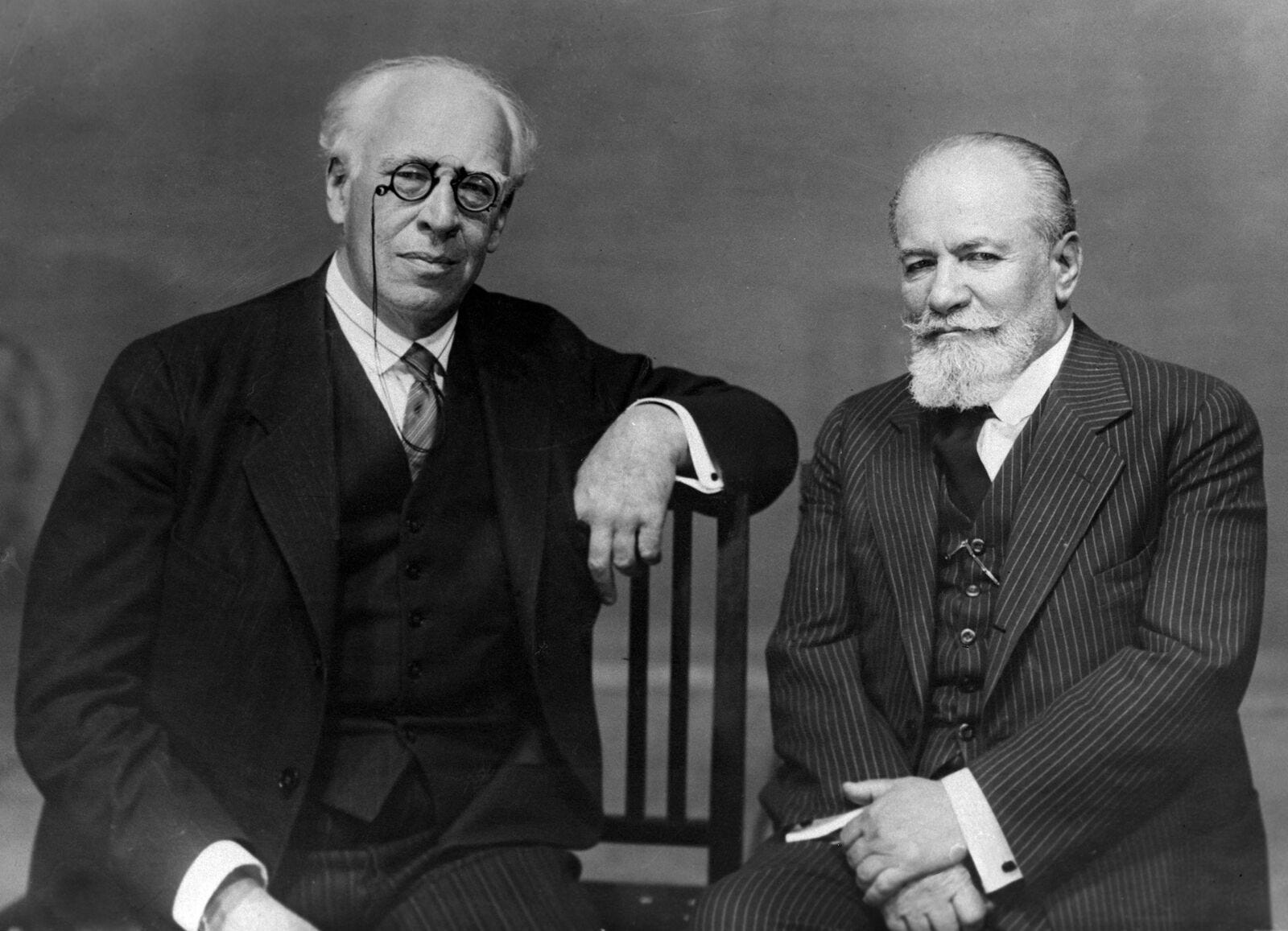
This approach draws its strength from psychological nuance, but it is only one path to emotional truth. Other methods reach similar depth through metaphor, rhythm, or physical tension—as seen in Sanford Meisner’s essential actions or Michael Chekhov’s use of movement qualities and psychological gesture.
In the Soviet Union, this model was institutionalized through organizations like the Union of Soviet Writers and the Repertoire Committee (Glavrepertkom), which sanctioned an official version of Stanislavsky’s system. This state-approved model privileged literal interpretation and discouraged imaginative experimentation that might challenge the ideals of socialist realism.
Yet Stanislavsky himself continued to evolve, becoming more actor-centered and exploratory in his later work. The score, in this light, is not just a tool but a framework that reveals how an actor thinks, and shapes those thoughts within existing paradigms. As with all discipline-specific languages, it codifies what is askable, permissible, and meaningful within a discipline.
By extension, the score reflects the broader culture of performance-making—whether it values psychological realism, ritual, improvisation, or symbolism. It is both a trace of the actor’s inner process and a map drawn from the systems that train and guide them.
Your Personal Journey
You’ll have your own journey with the practice of making your actor’s book—and it might be different from project to project. Doing one isn’t about proving anything. It’s a working document where you map the terrain and explore possibilities in your rehearsal. You might note:
When a beat changes,
What action you're playing in a line (like “to challenge” or “to protect”),
What your character wants and how they try to get it,
Or even simple reminders: “Breathe here,” “Hold back,” “Let it land.”
Some actors write copious notes and backstories. Others mark only key shifts. I’ve known actors who draw, color-code, and write poems in the margins to get inside the scene. Whatever helps you tune in—that’s the right way.
Here’s how I think of it:
These notes are like the rough sketch an artist makes before shading in the details. You know—those soft lines that give proportion and understructure to a still life or a figure in motion. Or like the wire armature inside a clay sculpture—it holds the shape, gives it form, but it’s not what people see.
Your book is where you figure out how the character works. But what audiences (and cameras) crave are the responsive details that make it human; a glance, a shift in breath, a real moment that isn’t owned by you but created in between you and others. That’s the good stuff, and it’s what lives beyond the page. The notes aren’t the performance. They’re what let you be free in the performance. You build your structure then let it go. Be in the scene and trust the work.
More Diverse Foundations?
Are there other ways of scoring a performance outside the Stanislavsky and Nemirovich-Danchenko method? Of course! And there is no obligation to use only one. You might find that one method plays to your strengths, reinforcing your biases. Another might stretch you beyond your comfort zone. It’s important to use the tools that will strike the balance of equipping you with new discoveries without undermining your confidence and ability.
While all actor scores serve as structures for performance, they emerge from distinct logics: some are shaped by how language lives in and is organized by the body, others are built from impulses that precede or even contradict language, and still others arise from inner images that generate both impulse and speech. The following three approaches—Grotowski, Active Analysis, and Crosspoints—demonstrate these differing foundations and how they guide the actor’s score in practice.
Grotowski: Score as Precision Through Impulse
In Grotowski’s physical training and performance, the actor develops a sequence of physical actions—a score—that is:
deeply rehearsed and repeatable,
yet always alive and reactive.
For example, a performer might build a score involving a fall to the knees, a gesture to the sky, and a sudden twist. Each gesture is linked to a breath, a thought, or an inner need. This isn’t choreographed in the dance sense; it’s a ritualized action, precise but always fed by impulse.
The score frees the actor from thinking about “what comes next” so they can focus on “how I meet this moment this time.”
Active Analysis: Score as Dynamic Mapping
In Stanislavsky’s Active Analysis is the evolution of textual analysis, particularly as interpreted by Knebel. It is an iterative process where actors explore a scene through a series of improvisations without words and eventually adding elements of language. The actors test different actions and relationships without settling on fixed blocking or line readings. After each round, the group reflects, refines, and replays the scene, allowing discoveries to accumulate organically and resolve in a list of action-based prompts.
For instance, in a scene from The Seagull, the actor might arrive at these:
to provoke,
to retreat,
to test boundaries.
Over rehearsals, they might structure a sequence:
“Cross to the window while testing his resolve. Stop. Turn. Let silence do the work. Move closer with hesitation. Finally speak the truth as you sit.”
The score here is emotional and physical, but not fixed. Each run-through can shift in tempo, tone, or intensity while preserving the shape.
Crosspoints: Score as Relational Weaving
In Crosspoints, the actor’s score emerges from different categories of prompts. Two of them are: the partner—your projected perception of the person you’re in relationship with—and the emblem—your habitual pattern of behavior and worldview, expressed psychophysically. These combine with four other factors in the system to create a field of possibilities, embedded in reactive presence instead of fixed objectives. Crosspoints attends to how you relate and respond to the complex moment, mapping changes in the scene as shifts in these embodied orientations.
Take, for example, the confrontation between Hamlet and Gertrude, where Hamlet accuses his mother of moral blindness following his father's murder:
Hamlet
Emblem: seeking comfort or nostalgia (longing for the stability of the Ideal Living Space)
Partner: sees Gertrude as an ally—a former trusted guide who could still be redeemed or awakened
Gertrude
Emblem: self-protection (Lock on Door))
Partner: sees Hamlet as a loose cannon (Rebel) who must be managed carefully
The strength of these mnemonic prompts is that they may be switched and rearranged swiftly to create new frameworks for interaction. In another arrangement, they come out differently:
Hamlet
Emblem: confrontation, precision and provocation (Weapon)
Partner: sees Gertrude as a judge—misguided, but in need of persuasion or exposure
Gertrude
Emblem: guilt-laced avoidance (Least Favorite Snapshot)
Partner: sees Hamlet as her moral compass (Angel)—who sees too much and from whom she can’t hide
These shifts do not alter the literal text or actions of the scene, but they radically change its undercurrent, tone, and muscularity. They can underscore an entire scene, or dynamically transform within it. The result is not a single interpretation but a field of permutations, generated through switching elements of the Crosspoints—offering variation in each run-through until a mutual creative framework is found.
The Score is a Living Structure
Across these approaches, the score is never a fixed blueprint but a living structure that supports presence, variation, and truth in performance. Grotowski anchors the actor in physical precision fed by raw impulse; Active Analysis invites a dynamic interplay between action, emotion, and evolving language; and Crosspoints charts an intuitive map of relationships, images, and embodied rhythm. Each method offers a different entry point, but all share the same aim: to free the actor from the burden of control, allowing the moment to breathe, shift, and come alive with performed detail that no notation could ever fully capture.